
Why the Type of Exhibition Stand Matters
Many exhibitors design first and think about layout later. It should be the other way around. The stand type decides how visitors approach you, how much space you can use and how many people can walk in from different directions. It also decides how much you'll spend on build, transport and installation.
Whether you're comparing types of exhibition stalls in India for a local show or planning for a European fair, the same principle applies: match the stand to the objective, not the other way around.
1. Custom Exhibition Stands
Best for: Brands that want to be remembered.
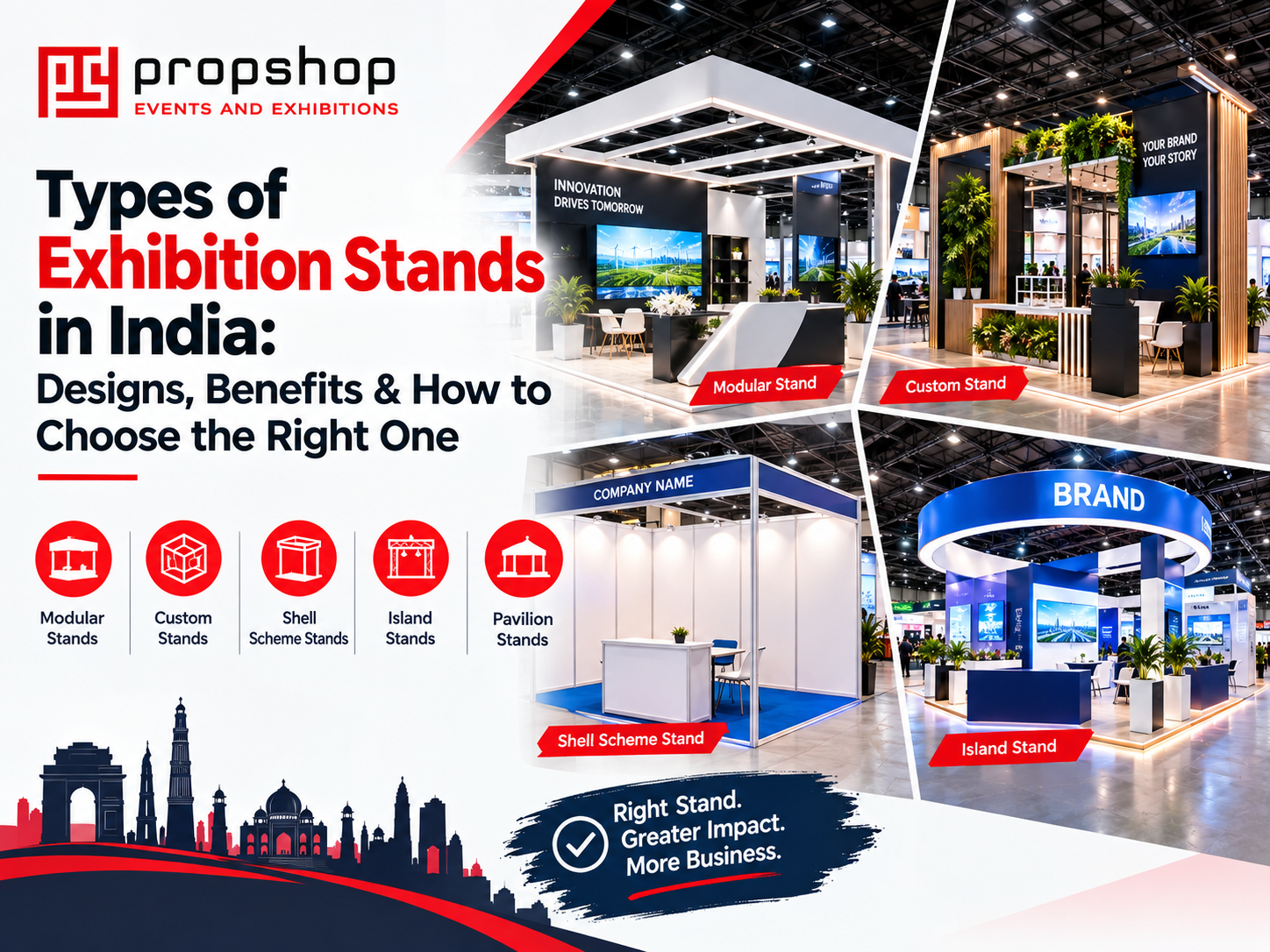
Custom exhibition stands in India are designed and built from scratch around your brand story, product range and audience. Nothing is off the shelf. You choose the structure, materials, lighting, graphics, product displays and even the flow of visitors through the space.
Benefits:
- Complete freedom in design, height, shape and finish
- Strong brand recall, since no other stand looks like yours
- Room for demo zones, meeting rooms and interactive displays
- Higher-quality first impressions for premium products
The trade-off is a higher upfront investment and a longer planning timeline. If you exhibit once or twice a year and lead quality matters more than cost per square metre, a custom exhibition stall design in India is usually the best return.
2. Modular Exhibition Stands
Best for: Brands that exhibit often and in different spaces.
Modular exhibition stands are built from reusable components such as frames, panels, counters and graphics that snap together in different configurations. Today you might build a 9 sqm inline stand, and next quarter a 36 sqm corner stand from the same kit.
Benefits:
- Cost-effective over multiple shows
- Fast setup and dismantling
- Flexible layouts for changing stand sizes
- Lower shipping and storage costs
Modular systems have improved a lot. With good graphics and lighting, they can look nearly as polished as a custom build.
3. Portable Exhibition Stands
Best for: Small budgets, small spaces, and fast turnarounds.
Portable exhibition stands include pop-ups, roll-ups, banner stands, fabric displays and tabletop units. They pack into a carry case, and one person can set them up in minutes.
Benefits:
- Very affordable
- Easy to transport, even as hand luggage
- Ideal for regional expos, roadshows and pop-up events
- Minimal setup labour
They won't create the "wow" of a large build, but for startups and first-time exhibitors testing a show, they're a smart way to begin.
4. Double-Decker Exhibition Stands
Best for: Large brands that want dominance and hospitality space.
Double-decker exhibition stands add a second floor, usually a meeting lounge or VIP hospitality area, above a ground-level display. They rise above the crowd, which makes them visible from across the hall.
Benefits:
- Maximum visibility and brand presence
- Private meeting space for closing deals away from the noise
- More usable area without needing a larger floor plot
- Strong prestige at industry-leading shows
They need structural engineering, organiser approvals and careful safety compliance, so work with an experienced exhibition stand design company in India that has built them before.
5. Inline / Shell Scheme Stands
Best for: Budget-conscious exhibitors.
Shell scheme stands are the standard package many organisers offer: walls, a fascia board, basic lighting and a power point. You bring the graphics, furniture and products.
Benefits:
Lowest cost and least hassle
Quick to set up
Organiser-managed, so fewer approvals to chase
The limit is that everyone's stand looks similar. Smart graphics, good lighting and well-chosen furniture can make yours stand out within the same frame.
Get a Free Exhibition Stand Design from The Propshop today.
Tell us about your show, and we'll send you a tailored concept, with no obligation.
Get a QuoteStand Types Based on Open Sides
Your floor plan decides how many sides of your stand are open to the aisle. Each layout changes how visitors reach you.
- Inline (one side open): A single open front between two neighbours. It's compact and economical, but your branding has to work hard in a narrow frontage.
- Corner stands (two sides open): Positioned at the end of a row with two open sides. They catch traffic from two aisles and give you more visibility for little extra cost. A strong choice for mid-sized budgets.
- Peninsula stands (three sides open): These project into the aisle with three open sides, with a neighbour only at the back. They draw traffic from multiple directions and work well for product displays.
- Island stands (four sides open): An island stand sits alone with aisles on all four sides. It gives you the most exposure, the most creative freedom and a 360° brand experience. It is also the most demanding to design, since there is no "back" and every side must look good.
- Two-side and three-side open stands: These are the corner and peninsula layouts described above. When you're booking space, prefer two- or three-side open plots over inline wherever the budget allows. The extra visibility often pays for itself in footfall.
How to Choose the Right Exhibition Stand
You don't need a design degree, just honest answers to a few questions.
- What's your goal? Lead generation, product launch and brand awareness each call for a different stand. A launch benefits from a custom or island design, while lead-gen at a smaller show may be well served by a modular corner stand.
- What's your budget, including hidden costs? Remember transport, installation, electricals, storage and dismantling, not just design.
- How often do you exhibit? Frequent exhibitors save money with modular systems. One big annual show justifies a custom build.
- What's your plot size and layout? Ask the organiser for the floor plan early. It determines what's possible.
- What does your audience expect? Buyers in engineering, pharma or luxury lifestyle judge you differently. Make sure the stand's look matches their expectations of your brand.
- Who's building it? A good build partner will flag structural, safety and logistics issues before they become expensive.
Why Work With The Propshop India
With more than 14+ years of experience in the exhibition industry, The Propshop designs and builds stands for shows in India and across Europe, including Germany, France, Italy, Spain and the Netherlands. For Indian exhibitors heading abroad, our Hindi- and English-speaking project managers keep communication simple from concept to on-site handover, so nothing gets lost in translation on the other side of the world.
Whether you need a modest modular stand or a two-storey showpiece, we handle the design, fabrication, logistics and installation, so your team can focus on the conversations that win business.