


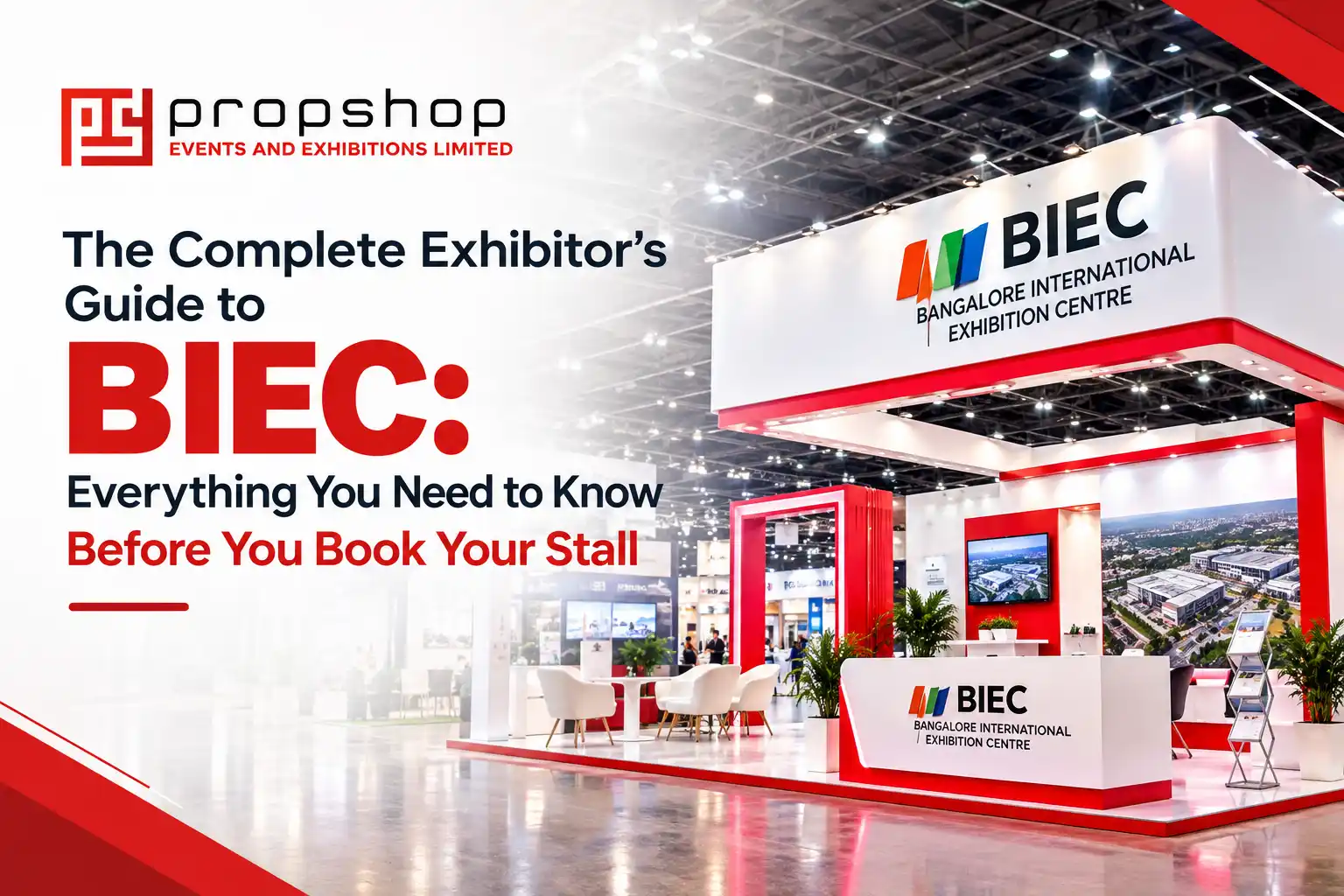
Why BIEC Is a Different Beast
BIEC sits on the outskirts of Bangalore in Tumkur, spread across a genuinely massive footprint with multiple exhibition halls, wide internal roadways, and an open-air layout that's more industrial-park than convention-center. That's great news if you're exhibiting heavy machinery or need large truck access for your build. It's less convenient if you haven't planned your logistics timeline properly because, unlike compact city-center venues, getting materials in and out of BIEC takes real lead time.
For exhibitors used to venues like Pragati Maidan or Bombay Exhibition Centre, the first surprise is usually scale. Hall ceiling heights, floor load capacities, and power supply points vary by hall, which means your BIEC exhibition stall design has to be planned around the specific hall you're allotted — not a generic template you reuse show after show.
Start With the Venue Rules, Not the Design
Before a single render gets made, any serious BIEC stall builder will pull the organizer's exhibitor manual and check three things:
Structural height restrictions: Different halls at BIEC allow different maximum stand heights, and going over means a rejected structure on-site, which is a nightmare during setup week.
Move-in and move-out windows: BIEC schedules are tight and enforced. Missing your slot can mean waiting hours, sometimes losing a full setup day.
Sustainability and material norms: Increasingly, organizers at BIEC are pushing for reusable, low-waste build materials rather than pure MDF-and-paint structures that get thrown away after three days.
Skipping this step is the single most common reason stands get flagged, delayed, or forced into rushed on-site fixes. A good exhibition stand builder in Bangalore treats the exhibitor manual as the actual brief not the client's mood board.
What Good BIEC Booth Design Actually Looks Like
A booth that performs well at BIEC isn't necessarily the flashiest one on the floor it's the one built around how people actually move through that specific hall. A few things separate stands that generate real footfall from ones that just look nice in photos:
Sightlines from the aisle. BIEC halls are wide, and aisles can be long. Your branding needs to be legible from a distance, not just up close.
Open, low-barrier entry points. Visitors walking BIEC's halls for six to eight hours don't want to navigate a maze to enter your stand. Fewer physical barriers usually means more walk-ins.
Weather-conscious detailing. Bangalore's weather is mild most of the year, but BIEC's semi-open connecting areas mean dust and occasional humidity are real factors; materials and finishes should account for that, not just look good in a render.
Functional zoning. A reception/greeting area, a product or demo zone, and a private meeting or negotiation corner. This structure consistently outperforms open, undivided layouts for B2B lead capture.
If you're comparing BIEC exhibition stall design options from different vendors, ask each one to walk you through how their layout handles foot traffic specifically in your allotted hall not a generic "high-impact design" pitch.
Budgeting Realistically for a BIEC Stall
Costs at BIEC break down into a few predictable buckets: structure and fabrication, branding and graphics, furniture and AV, electrical and utility connections, and logistics (transport plus labor for setup/dismantling). What catches first-timers off guard is usually the logistics line — because of BIEC's location outside central Bangalore, transport and labor costs can run higher than exhibitors initially budget for, especially for custom builds shipped in from another city.
A reliable Bangalore exhibition stand builder will give you a cost breakdown that separates these buckets clearly, rather than one lump "package price" that makes it hard to see where money's actually going or where you could trim without hurting the design.
Choosing the Right BIEC Stall Builder
This is where most exhibitors either save themselves a lot of stress or set themselves up for a difficult few days on-site. A few questions worth asking any BIEC exhibition stall contractor before signing off:
- Have they physically built in the specific hall you've been allotted, or only "at BIEC" in general?
- Do they have a local Bangalore team for on-ground supervision, or is everything managed remotely?
- Can they show past project photos from BIEC specifically, not just generic portfolio shots?
- What's their contingency plan if materials get delayed at the venue gate?
Exhibitors flying in from other cities Delhi, Mumbai, Ahmedabad especially benefit from a contractor with an established Bangalore presence, since it removes a lot of the coordination friction around vendor passes, material entry permissions, and last-mile logistics that out-of-town teams often underestimate.
Making the Stand Work After It's Built
A well-designed stall is only half the job. The days leading up to and during the show matter just as much:
- Confirm your electrical load requirements with the organizer at least two weeks ahead - last-minute power upgrades at BIEC are slow to process.
- Brief your on-floor staff on the stand layout itself, not just the pitch - confused staff undercut even the best design.
- Plan your teardown logistics as carefully as your setup - dismantling delays can lead to storage or penalty charges.
Final Thoughts
BIEC rewards exhibitors who plan around its specific quirks rather than treating it like any other venue. Whether this is your first show here or your tenth, the exhibitors who stand out are the ones who pair strong design with a genuinely local understanding of the venue's rules, rhythms, and layout. If you're weighing your options for a BIEC exhibition stall contractor, it's worth having a conversation with a team that's actually built on that floor before just quoting a price for it.