

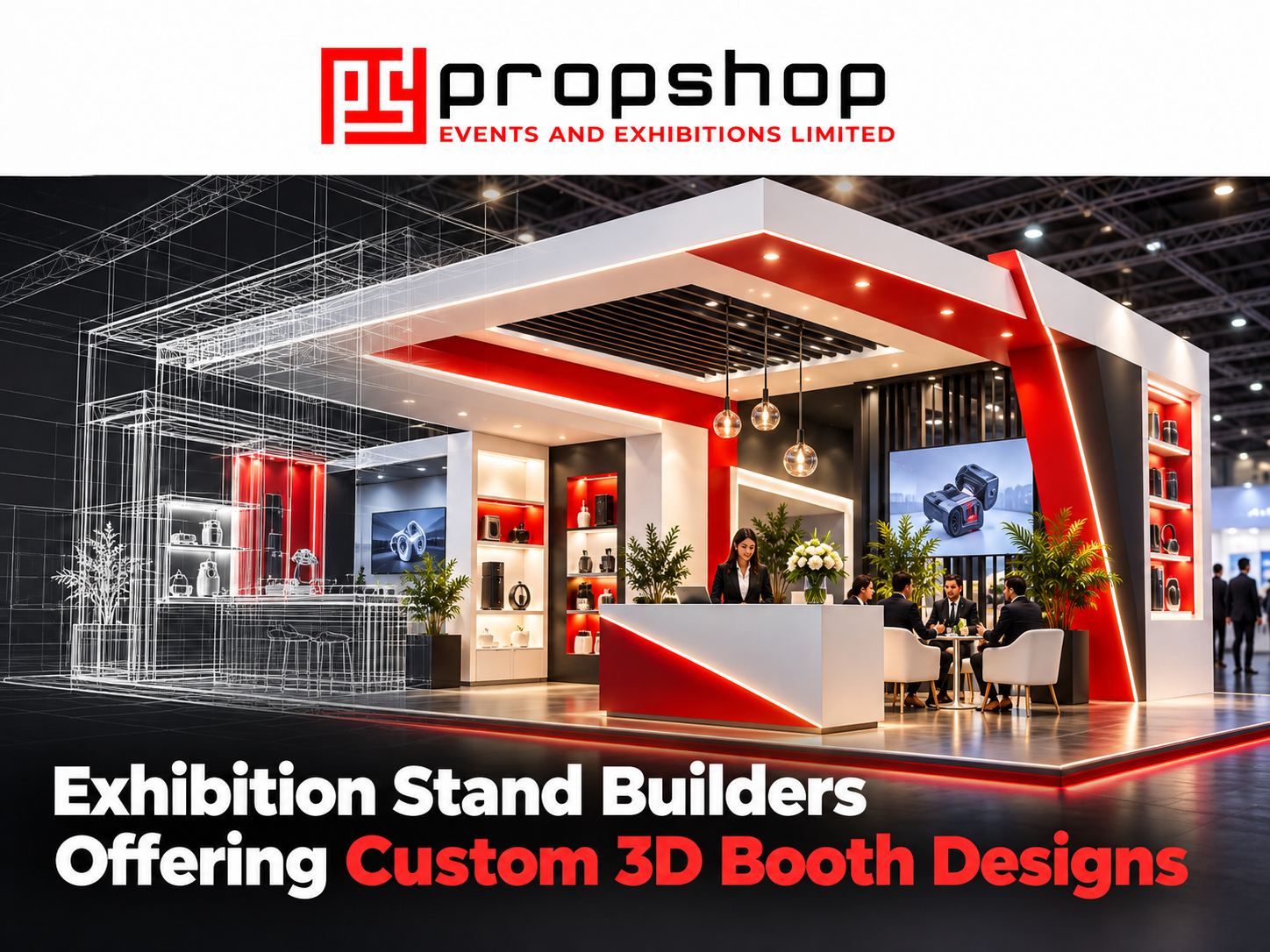
Today, the smartest brands walk into their trade show knowing exactly what their booth will look like, down to the lighting angle and the texture of the reception counter. That's the power of custom 3D exhibition booth design, and it's quietly become the single biggest differentiator between exhibitors who dominate a hall and exhibitors who blend into it.
If you're evaluating exhibition stand design services for an upcoming show, here's why 3D visualization isn't a "nice-to-have" anymore it's table stakes.
What Custom 3D Exhibition Booth Design Actually Means
Let's clear up the confusion first. A lot of exhibitors assume "3D design" just means a fancier drawing. It's much more than that.
3D exhibition stand design is the process of building a fully rendered, dimensionally accurate digital model of your booth before a single panel is cut or a screw is turned. It accounts for your actual floor plan, ceiling height restrictions, sightlines, foot traffic flow, branding placement, lighting, furniture, and even how your booth will look from three different aisles at once.
Think of it as a dress rehearsal for your brand, except nobody's watching except you.
A serious exhibition booth design agency will typically walk you through:
- Concept sketches based on your brand brief and goals
- Full 3D exhibition stall design renders from multiple angles
- Material and finish previews (so you're not guessing what "brushed aluminum" looks like under show lighting)
- Walkthrough animations or 360° views for stakeholder buy-in
- Revision rounds before production even starts
This isn't decoration. It's risk management dressed up as design.
Why Exhibitors Are Demanding 3D Visualization Before They Sign Off
1. You Stop Approving Things You Can't Actually Picture
Flat 2D layouts ask you to imagine height, depth, lighting, and flow all in your head. Most people can't do that reliably, and when the stakes involve your brand's reputation on a European show floor, "probably fine" isn't good enough.
Exhibition booth 3D visualization removes the guesswork. You see the meeting pods, the product display walls, the hanging signage exactly as visitors will see them. Approvals become confident decisions instead of nervous gambles.
2. Mistakes Get Caught on a Screen, Not on the Show Floor
Here's an uncomfortable truth: fixing a design flaw during production costs money. Fixing it after your booth is already built and shipped costs money, time, and your composure three days before doors open.
A detailed 3D model surfaces problems early — an awkward pillar placement, a counter blocking a walkway, branding that gets swallowed by ceiling rigging. Catching these in a render is a five-minute fix. Catching them onsite is a five-alarm fire.
3. It Makes Stakeholder Approval Painless
If you've ever tried explaining a booth concept to a CMO or a client in another country over email, you know the pain. "Trust me, it'll look great" doesn't cut it when budgets are being signed off.
A polished custom exhibition booth design render does the persuading for you. Send a walkthrough video, share a 360° link, or drop renders into a deck — decision-makers get it instantly, without a single site visit.
4. Consistency Across Multiple Shows Becomes Effortless
For exhibitors doing multiple shows a year — especially Indian companies exhibiting across Germany, France, Italy, Spain, or the Netherlands — brand consistency matters enormously. A 3D-first design process lets your exhibition partner adapt a proven concept to different hall dimensions and regulations without reinventing your brand identity each time.
Planning Your Next Exhibition Stall?
Turn your booth space into a powerful brand experience that attracts visitors and generates leads.
Get a QuoteWhat to Look for in Exhibition Stand Design Services
Not every "3D design" offering is equal. Some agencies use it as a sales gimmick — a pretty picture with no real technical grounding behind it. Here's how to separate the professionals from the pretenders.
Ask if the render is dimensionally accurate. A design that looks stunning but ignores hall height limits, fire codes, or your actual booth footprint is a liability, not an asset.
Ask how many revision rounds are included. Good studios expect you to want changes. If a vendor treats your first-round feedback as an inconvenience, that's a red flag.
Ask to see past 3D-to-real-build comparisons. Any agency confident in its process will happily show you side-by-side photos of a render next to the completed stand. If they can't, ask why.
Ask about local execution capability. A gorgeous render means nothing if the team building it doesn't understand local venue regulations, material sourcing, or logistics in the country where your show is happening.
Ask about communication during the process. For Indian exhibitors working with international builders, clear, jargon-free communication — ideally with project managers comfortable in both Hindi and English — makes the whole process dramatically smoother.
The ROI Nobody Talks About: Confidence
There's a business case for 3D design that goes beyond avoiding mistakes. It's confidence yours, your team's, and your stakeholders'.
When your sales team walks onto the show floor already having "seen" the booth a dozen times in renders and walkthroughs, they brief visitors better. When your leadership has already approved a 360° view, they show up energized instead of anxious. When your brand identity has been proofed digitally against every angle, you're not hoping it works. You know it does.
That's the quiet advantage custom 3D design gives exhibitors: certainty in an environment the trade show floor that's otherwise full of variables you can't control.
Bringing It All Together
Custom 3D exhibition booth design isn't a trend; it's simply what happens when exhibition stand building matures into a genuine design discipline. Between reduced risk, faster approvals, stronger stakeholder buy-in, and consistent branding across multiple international shows, it pays for itself well before your booth ever gets built.
If you're planning your next show and your current vendor is still handing you flat sketches and vague promises, it might be time to ask a simple question: can I see it in 3D first?
If the answer is no, keep looking.