


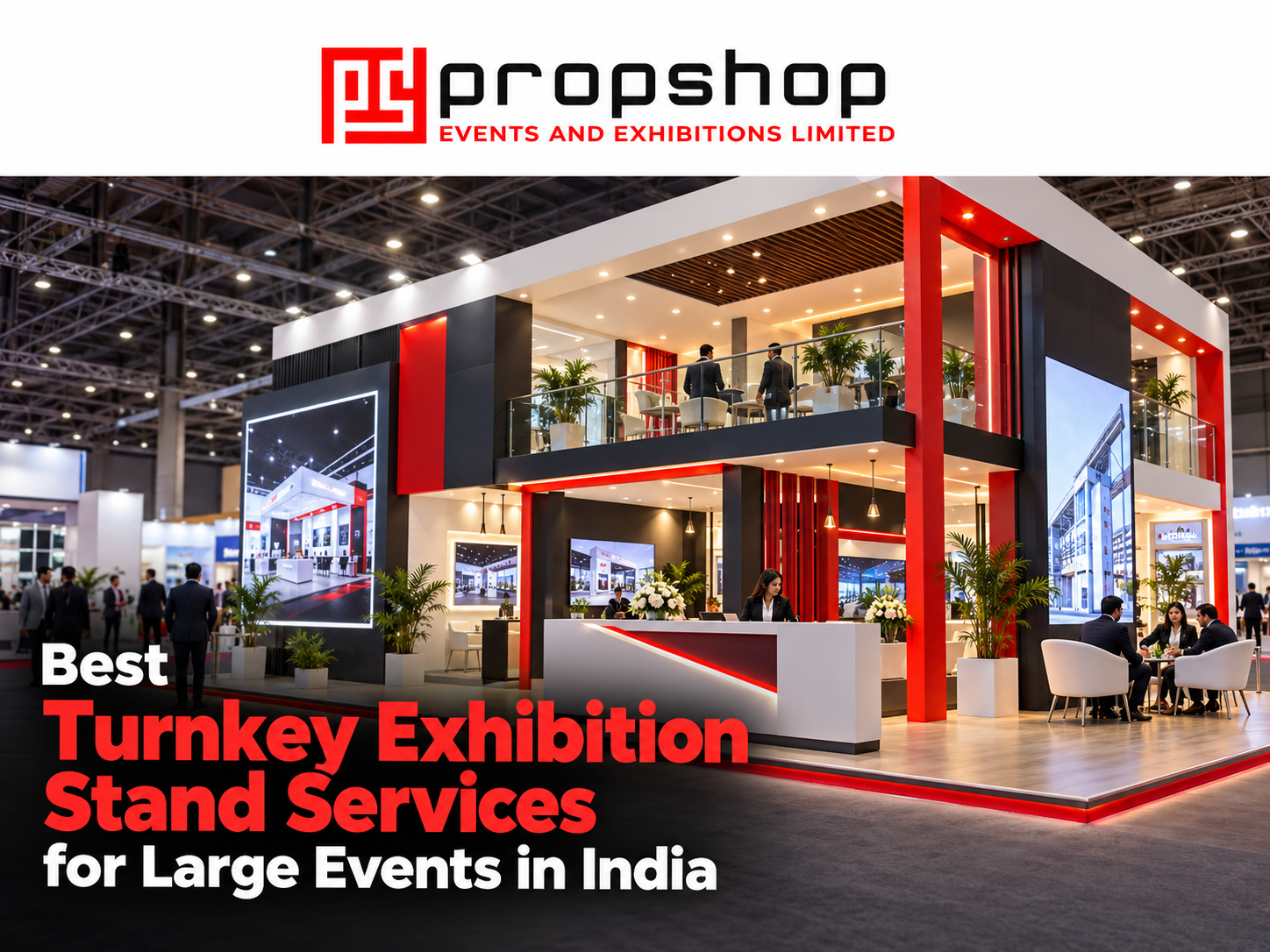
Multiply that across a two-week build timeline, and it's easy to see how gaps appear: a missed handoff here, a delayed approval there, and suddenly the budget or the schedule takes a hit. This is exactly the problem that turnkey exhibition stall builders are meant to solve: instead of managing five or six vendors separately, one partner takes ownership of the entire project, from the first concept sketch to the last dismantling truck leaving the hall.
What Is a Turnkey Exhibition Stand?
"Turnkey" simply means you're not stitching the project together yourself. A single company coordinates design, fabrication, graphics, furniture, lighting, logistics, installation, and dismantling under one contract and one project team. In theory, you approve a design and a budget, and the rest is handled without you having to chase separate suppliers for each element.
In practice, the exact scope varies quite a bit from one company to another. Some turnkey providers fabricate everything in-house; others outsource parts of production while managing the coordination themselves. Some include AV and technology as standard; others treat it as an add-on. This is why it's worth reading a quotation closely rather than assuming "turnkey" means identical things everywhere; the label describes an approach to project management, not a fixed checklist.
What Services Are Included in Turnkey Exhibition Stand Design?
Exhibition stand concept. The starting point is usually a concept that reflects your brand identity and what you actually want visitors to do at the stand: see a product, sit for a meeting, watch a demo.
3D exhibition stand design. Before anything is built, a 3D render lets you walk through the layout, check sightlines, and catch problems while changes are still cheap to make.
Exhibition stand fabrication. This is the physical build: structural framework, flooring, walls, counters, meeting rooms, storage, and finishes, produced to match the approved design and the venue's structural limits.
Graphics and branding. Printed panels, backlit graphics, logos, and product visuals need to be consistent in color and messaging with everything else your brand puts out.
Furniture and fixtures. Seating, reception counters, meeting tables, and display units are chosen (or built) to match the stand's style and the practical need for storage and workspace.
Lighting and AV. This ranges from basic spotlighting to LED walls and interactive screens, depending on budget and what the stand is meant to communicate.
Logistics. Fabricated components have to reach the venue on schedule, which means factoring in inter-city transport, venue delivery slots, and unloading access.
Installation and dismantling. Exhibition halls run on tight setup and teardown windows, often overnight or across a couple of days, so an experienced on-site crew matters as much as good design.
Why Work With a Turnkey Exhibition Stand Builder?
The honest answer isn't that turnkey is always cheaper or faster; sometimes managing vendors separately can cost less if you have the bandwidth to coordinate it yourself. The real advantage is accountability. With one point of contact, there's no back-and-forth about whose responsibility a delay is. Design and fabrication stay connected, so what gets built matches what got approved. Timeline management sits with one team instead of being pieced together across companies, and if something goes wrong on-site, there's a single project manager to call rather than three.
Exhibition Stand Design and Fabrication: How the Process Works
- Brief and requirement gathering: objectives, budget, booth size, and must-haves.
- Concept development: early sketches or mood boards based on the brief.
- 3D stand design: a detailed render for review.
- Design revisions and approval: usually a couple of rounds before sign-off.
- Technical planning: structural drawings, electrical layout, material specs.
- Fabrication and production: the physical build, off-site.
- Quality check: inspection before anything leaves the workshop.
- Transportation and logistics: moving components to the venue.
- On-site installation: assembly within the venue's build window.
- Final inspection and handover: walkthrough before the show opens.
- Dismantling: teardown and removal once the event ends.
Turnkey Exhibition Services for Large Events
Larger booths bring a different level of complexity: multiple meeting rooms, demo zones, hospitality areas, private offices, and several branding surfaces that all need to stay visually consistent. Add large-format graphics, LED walls, suspended branding where the venue allows it, and multiple installation crews working against the same deadline, and coordination becomes a bigger job than design alone. This is where large event exhibition stand builders earn their keep not just in creativity, but in sequencing dozens of moving parts so nothing collides on installation day, while still meeting the venue's safety and compliance requirements.
How Much Does a Turnkey Exhibition Stand Cost in India?
There's no single number here, and anyone quoting one without seeing your requirements is guessing. Cost depends on booth size, design complexity, materials and construction method, flooring, graphics volume, furniture, lighting and AV, meeting rooms, storage, the city and venue, transportation distance, and how tight your timeline is. Two booths of identical square footage can land at very different budgets depending on whether one uses modular reusable systems and the other uses fully custom fabrication with premium finishes.
How to Choose an Exhibition Stand Contractor in India
Before signing on, it's worth evaluating a contractor on portfolio and design capability, in-house fabrication capacity, project management approach, the experience of the installation team, logistics support, material quality, technical understanding of electrical and structural requirements, communication style, timeline discipline, transparency in quotations, familiarity with the specific venue you're exhibiting at, flexibility with late design changes, and whether they offer any support after installation. A good exhibition stand contractor in India will usually be upfront about which of these they handle directly and which they don't.
What Should Be Included in a Turnkey Exhibition Stand Quotation?
Compare quotations line by line, not just the bottom number. Check whether it covers design and 3D renders, fabrication, branding and graphics, flooring, furniture, lighting and electrical work, AV, transportation, installation, dismantling, labour, taxes, venue-related charges, and any revision charges. Two quotes that look similar on price can represent very different scopes once you look closely.
Make Your Next Exhibition Stand Count
Get a custom stall designed around your brand, space, and business goals.
Get a QuoteQuestions to Ask Before Hiring Turnkey Exhibition Stall Builders
- Who will personally manage the project?
- Is fabrication done in-house or outsourced?
- What exactly is included in the quoted price?
- How many design revisions are covered?
- Who arranges and pays for transportation?
- Who handles on-site installation, and how many people will be there?
- Is dismantling part of the package?
- How are venue rules and permissions handled?
- What happens if the design changes after approval?
- What's the realistic project timeline, start to finish?
- Are electrical and AV requirements built into the quote or billed separately?
Turnkey Exhibition Stand vs Multiple Vendors
| Column 1 | Column 2 | |
|---|---|---|
| Factor | Turnkey Partner | Multiple Vendors |
| Project coordination | Centralized | Multiple contacts |
| Design & fabrication | Coordinated | May involve separate vendors |
| Communication | One primary contact | Several communication channels |
| Timeline management | Centralized | Requires coordination |
| On-site responsibility | Usually centralized | May be divided |
| Accountability | Clearer project ownership | Can be split |
Neither approach is universally better it depends on how much coordination bandwidth you have in-house and how complex the project is.
Final Thoughts
Choosing between turnkey exhibition stall builders and a mix of independent vendors really comes down to how much project-management risk you're willing to carry yourself. A turnkey partner should be judged on design quality, fabrication standards, project management, communication, logistics, and genuine understanding of exhibition-hall realities, not just on the render they show you in the first meeting.
If you're planning a stand and want to think it through with someone who works in this daily, share your exhibition name, venue, booth size, event date, and any design requirements you already have; it's a useful starting point for a proper consultation, whether or not you end up working together.