


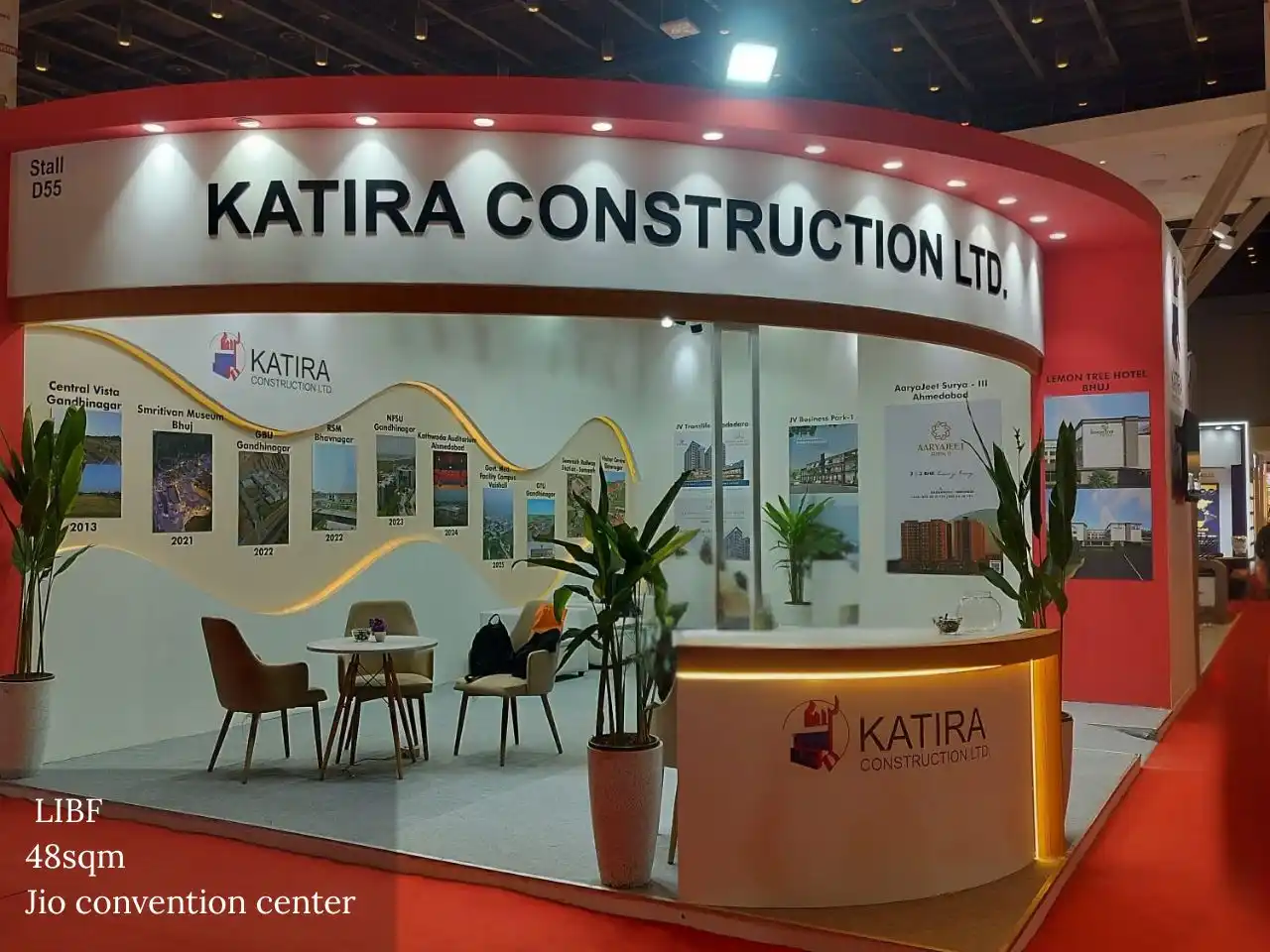
Underestimating the Importance of Booth Design
One of the biggest mistakes exhibitors make is treating booth design as an afterthought. At major US trade shows, attendees are exposed to hundreds or even thousands of exhibitors. Visitors make decisions within seconds about whether to approach a booth or continue walking. A generic or poorly executed expo stall design can easily get lost among competitors.
Professional exhibition stand design should do more than display products. It should:
- Communicate the brand message clearly
- Highlight key products and services
- Encourage visitor interaction
- Support lead-generation activities
Companies that invest in strategic booth design often attract significantly more qualified visitors than those relying on basic displays.
Choosing Booth Size Without a Strategy
Many first-time exhibitors assume that larger booths automatically produce better results. In reality, booth effectiveness depends more on planning than square footage. Some exhibitors reserve large spaces without a clear strategy for utilizing the area. The result is an exhibit that feels empty, confusing, and difficult to navigate.
Rather than focusing only on booth size, exhibitors should concentrate on creating an effective layout that enhances visitor flow, showcases products clearly, provides dedicated meeting areas, accommodates live demonstrations, and maximizes branding visibility. A well-planned booth layout can significantly improve visitor engagement and overall exhibition performance. A well-planned smaller booth can often outperform a larger but poorly organized exhibit.
Ignoring Local Audience Expectations
The US market often differs significantly from the Indian market in terms of buyer expectations and communication styles. Many exhibitors make the mistake of using the same marketing messages and presentations they use domestically.
American attendees typically expect:
- Clear product benefits
- Direct communication
- Concise messaging
- Practical demonstrations
Exhibitors should tailor their content and presentations to the expectations of the local audience rather than relying solely on existing marketing materials.
Waiting Too Long to Plan
Successful trade show participation begins months before the event.
A common mistake many exhibitors make is postponing important decisions related to booth design, logistics planning, travel arrangements, marketing activities, and product shipments. Delays in these areas can lead to higher costs, limited options, scheduling challenges, and unnecessary stress as the exhibition date approaches.
Late planning often results in:
· Higher freight costs
· Increased travel expenses
· Rush production charges
· Reduced booth quality
Early preparation provides more flexibility and better cost control throughout the project.
Working With Inexperienced Exhibition Stand Builders
Selecting the wrong exhibition partner can create significant challenges. Not all exhibition stand builder have experience working within the US exhibition industry. Regulations, venue requirements, labor rules, and logistics procedures can differ considerably from those in India.
Experienced exhibition stand builders understand:
- Venue regulations
- Installation requirements
- Union labor rules
- Material handling procedures
- Project timelines
Working with knowledgeable professionals helps avoid delays, compliance issues, and unexpected expenses.
Overcrowding Product Displays
Many exhibitors attempt to showcase every product they offer. While this approach may seem logical, it often overwhelms visitors. Cluttered displays can make it difficult for attendees to understand the company's core offerings and value proposition. Instead of displaying every product in their portfolio, exhibitors should focus on showcasing their best-selling products, new product launches, key innovations, and high-margin offerings. A targeted product presentation helps visitors quickly understand the company's strengths and makes the booth experience more engaging and memorable. A focused presentation often generates more engagement than an overloaded display area.
Neglecting Visitor Engagement
Some exhibitors spend heavily on booth construction but fail to create meaningful visitor experiences. An attractive booth alone does not guarantee success.
Visitors are more likely to engage with exhibits that include:
- Live demonstrations
- Interactive displays
- Product sampling
- Digital experiences
- Educational presentations
Effective exhibition stand design should encourage conversations and participation rather than passive observation.
Choosing the Wrong Booth Layout
Booth layout plays a major role in visitor accessibility.
Many exhibitors select booth configurations without considering traffic flow.
Two Side Open Stall Design
A two side open stall design provides access from two aisles, improving visibility and visitor movement.
Benefits include:
- Better exposure
- Increased accessibility
- Enhanced branding opportunities
- Improved visitor circulation
However, exhibitors must ensure branding remains visible from both open sides.
Three Side Open Stall Design
A Three side open stalls offers even greater accessibility and visibility.
Advantages include:
- Maximum visitor exposure
- Flexible layout options
- Improved crowd management
- Stronger brand presence
Many exhibitors fail to optimize these premium booth locations, reducing the value of their investment.
Overlooking Pre-Show Marketing
Some companies assume attendees will automatically find their booth.
Unfortunately, this rarely happens at large US exhibitions.
Successful exhibitors start promoting their participation well before the event through a combination of email campaigns, social media promotions, appointment scheduling, customer outreach initiatives, and digital advertising. These pre-show marketing efforts help increase brand awareness, attract targeted visitors, and secure valuable meetings before the exhibition even begins. Pre-show marketing increases booth traffic and improves meeting quality.
Failing to Train Booth Staff
Even the most impressive booth can underperform if staff members are unprepared.
Common staffing mistakes include:
- Limited product knowledge
- Poor communication skills
- Inconsistent messaging
- Lack of enthusiasm
- Inadequate lead qualification
Booth personnel should receive training on:
- Products and services
- Key sales messages
- Visitor engagement techniques
- Lead capture processes
- Competitor positioning
Well-trained teams significantly improve exhibition outcomes.
Talking Too Much About the Company
Many exhibitors focus excessively on company history, infrastructure, and achievements. While these details may be important, attendees are primarily interested in how products solve their challenges.
Exhibition conversations should focus on the value offered to potential customers by highlighting key benefits, problem-solving capabilities, industry-specific applications, competitive advantages, and potential return on investment. A customer-centric approach helps create meaningful discussions and demonstrates how the company's products or services address real business challenges. A customer-focused approach often generates stronger business opportunities.
Ignoring Cultural Differences
Although business practices are increasingly global, cultural differences still matter.
Common mistakes include:
- Using overly formal communication
- Delaying follow-up discussions
- Avoiding direct responses
- Misinterpreting buyer expectations
Understanding US business culture helps exhibitors build stronger relationships and improve communication effectiveness.
Poor Lead Management
Generating leads is only the first step.
Many exhibitors collect business cards but fail to implement structured lead-management systems.
Common issues include:
- Incomplete contact information
- No lead qualification process
- Delayed follow-up
- Poor data organization
Successful exhibitors use digital lead capture tools and categorize prospects based on interest levels and sales potential.
Underestimating Logistics Complexity
International exhibitions involve complex logistics processes. Many exhibitors underestimate the complexity of exhibition logistics, including freight transportation, customs clearance procedures, material handling requirements, and installation scheduling. Failing to plan these elements properly can lead to shipment delays, increased costs, setup challenges, and unnecessary disruptions during the event. Even minor logistics issues can delay booth readiness and increase costs. Working with experienced logistics providers helps minimize risk and ensure smooth execution.
Forgetting About Drayage and Labor Costs
First-time US exhibitors are often surprised by drayage and labor charges.
Unlike many countries, US exhibitions frequently involve additional costs for:
- Material handling
- Freight movement within venues
- Booth installation
- Electrical services
- Rigging
Failure to budget for these expenses can significantly impact overall exhibition costs.
Neglecting Technology Integration
Modern trade show attendees increasingly expect digital engagement.
Some exhibitors rely entirely on printed materials and static displays.
Technology can enhance engagement through:
- Interactive touchscreens
- Product configurators
- Virtual demonstrations
- LED displays
- QR-code lead capture
Strategic technology integration can improve visitor experiences and lead-generation effectiveness.
Focusing Only on Immediate Sales
Many companies evaluate trade show success solely based on immediate orders.
However, exhibitions often generate long-term opportunities through:
- Distributor partnerships
- Strategic alliances
- Market research
- Brand awareness
- Future sales pipelines
Success should be measured using multiple performance indicators rather than immediate revenue alone.
Delaying Follow-Up After the Show
One of the most common mistakes occurs after the exhibition ends.
Many exhibitors wait days or even weeks before contacting leads.
During this period, prospects may engage with competitors or lose interest.
Best practices include:
- Contacting leads within 48–72 hours
- Sending personalized follow-up messages
- Providing requested information
- Scheduling next-step meetings
- Tracking engagement activities
Prompt follow-up helps maintain momentum and improve conversion rates.
Not Measuring Results
Without performance measurement, it is difficult to determine whether exhibition participation was successful.
Key metrics may include:
- Number of leads generated
- Qualified prospects
- Meetings conducted
- Product demonstrations
- Partnership opportunities
- Revenue generated
- Cost per lead
Tracking these metrics helps exhibitors improve future trade show strategies.
Conclusion
US trade shows provide tremendous opportunities for Indian companies seeking international growth. However, success requires careful planning, strong execution, and an understanding of the unique characteristics of the American exhibition environment. Common mistakes such as poor expo stall design, inadequate planning, weak lead management, insufficient staff training, and selecting inexperienced exhibition stand builders can significantly reduce exhibition performance.
By investing in professional exhibition stand design, optimizing booth layouts such as a two side open stall design or three side open stall design, and focusing on visitor engagement and follow-up, Indian exhibitors can maximize their return on investment and build meaningful business relationships in the US market. Companies that learn from these common mistakes position themselves for stronger exhibition results, greater brand visibility, and long-term success in one of the world's most competitive business markets. Planning to exhibit in USA? Connect with our exhibition specialists at info@thepropshop.co.in for creative stand design and seamless booth construction solutions.