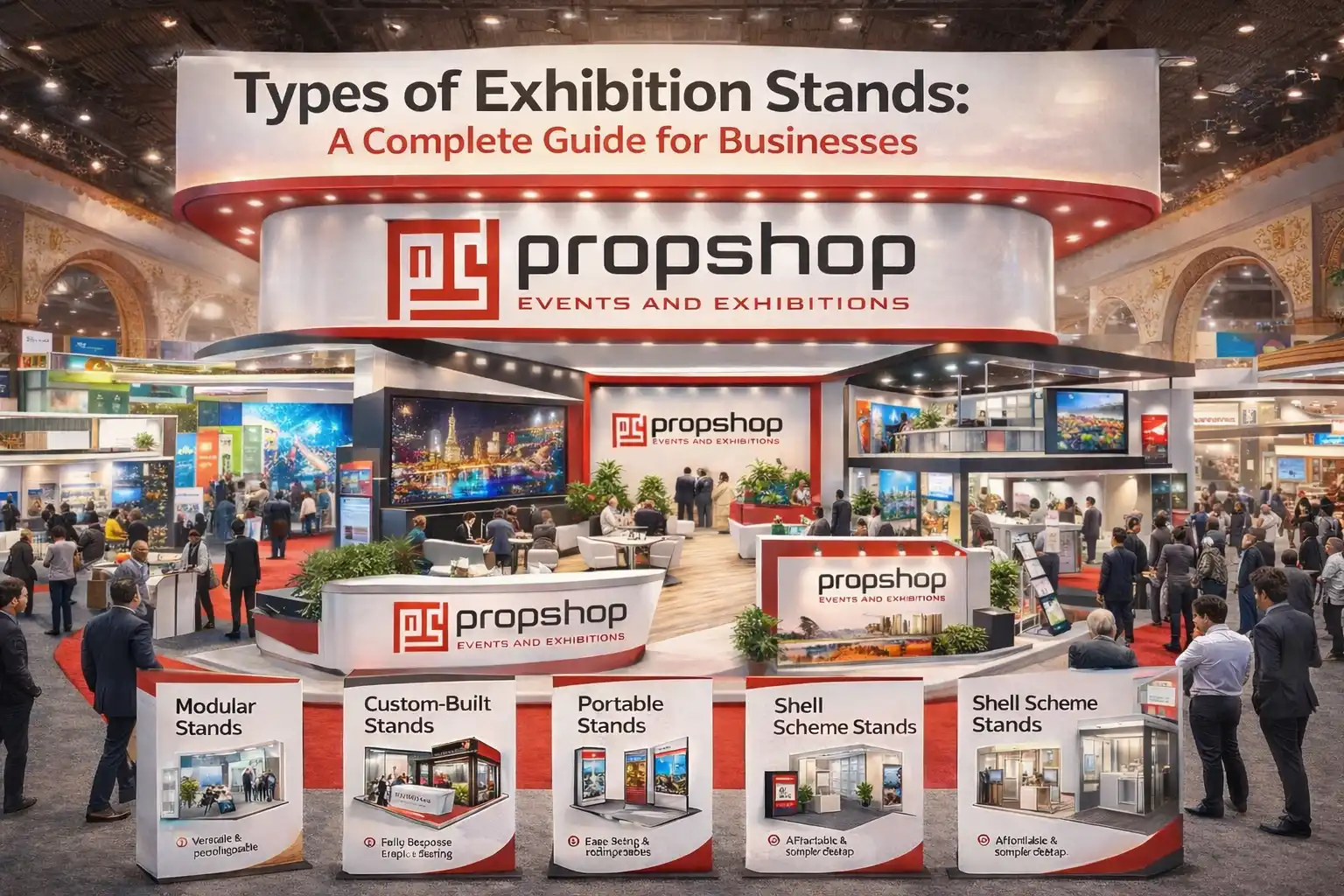
Why Choosing the Right Exhibition Stand Type Matters
An exhibition stand acts as a silent salesperson. The right exhibition stand type grabs eyes, sparks chats, and fills lead sheets. Wrong choices mean shouting into the exhibit hall void.
Space constraints, budget, and crowd flow dictate everything. Cramped inline stands in massive halls draw zero foot traffic. High budget islands dominate. Brands win by aligning stand choice with show size, product type, and message. Skip this step, and killer graphics flop.
Overview of Main Exhibition Stand Types
Trade shows offer exhibition booth types galore.
Below sits a rundown on key exhibition stand designs, with real world fit for each.
Modular Exhibition Stands
Modular exhibition stands use pre fab panels, frames, and graphics that snap together like high end Legos. Pieces swap for different shows.
Repeat events with flexibility needs call for these. SMEs testing waters at mid sized fairs benefit most.
Best for: Tech startups or service firms needing quick tweaks.
Space suitability: Small to medium (10-30 sqm).
Budget: Medium.
Pros:
- Reuse across shows cuts long term costs.
- Easy setup requires no army of builders.
- Custom looks arrive without full custom price.
Cons:
- Less "wow" than built from scratch options.
- Size limits wild shapes.
Custom Exhibition Stands
Custom exhibition stands deliver full creative freedom: curved walls, interactive pods, whatever designers dream up.
Flagship events where brand image screams loudest demand these. Product launches or CEO keynotes fit perfectly.
Best for: Global brands with big stories, like luxury auto or pharma giants.
Space: Medium to huge (20+ sqm).
Budget: High.
Pros:
- Total brand match amplifies vibe.
- Standout features like LED walls or demo theaters.
- High engagement keeps visitors lingering.
Cons:
- Pricey upfront.
- Longer build time requires planning.
Roll-up banners, pop up frames, and lightweight counters define portable exhibition stands. Everything packs into a suitcase.
Small local shows or pop ups where shipping kills budgets suit these. Bootstrapped teams starting out thrive.
Best for: Solopreneurs, freelancers, or tiny teams hitting multiple quick gigs.
Space: Tiny (under 10 sqm).
Budget: Low.
Pros:
- Dirt-cheap and fast to deploy.
- Fits any car trunk.
- Zero venue restrictions.
Cons:
- Basic visuals lack immersive magic.
- Feels temporary in pro halls.
Shell Scheme Stands
Organizer provided shells include basic walls, carpet, and electrics. Graphics and furniture add the personal touch.
First timers at big expos rely on these. Quick, no fuss entry prevails.
Best for: New exhibitors or budget pros filling gaps.
Space: Small to medium (9-20 sqm).
Budget: Low.
Pros:
- Plug and play focuses effort on content.
- Fair price with solid basics.
- Consistent hall look.
Cons:
- The generic shell screams "me too."
- Limited height and layout tweaks.
Inline / Row Stands
Single sided setups in a row of booths, back to back with neighbors. One or two fronts open to traffic.
Linear hall layouts at crowded shows default to these.
Best for: Cost conscious B2B firms in packed sectors like manufacturing.
Space: Small (6-12 sqm).
Budget: Low to medium.
Pros:
- Affordable visibility.
- Neighbor chats spill over.
- Fits tight budgets.
Cons:
- Trapped foot traffic.
- Backside views blocked.
Corner Stands
Two open sides meet at a corner, double the exposure.
Moderate traffic spots where angles boost walk up rates suit these.
Best for: Mid tier brands wanting edge without island cost.
Space: Medium (12-20 sqm).
Budget: Medium.
Pros:
- Twice the eyeballs.
- Natural flow invites browsers.
- Good for demos.
Cons:
- Still hemmed by neighbors.
- Uneven traffic on both sides.
Peninsula Stands
Three open sides jut into the aisle like a conversation starter.
Open areas for product showcases needing breathing room work best.
Best for: Consumer goods or tech with hands on demos.
Space: Medium-large (20-40 sqm).
Budget: Medium-high.
Pros:
- Surround-view immersion.
- Strong lead-gen potential.
- Flexible layouts.
Cons:
- Higher cost than inline.
- I need traffic management.
Island Stands
Four-sided freestanders sit in the hall's center. Total freedom rules.
Headliners dominating massive expos claim these.
Best for: Big consumer brands or innovators stealing the show.
Space: Large (40+ sqm).
Budget: High.
Pros:
- 360-degree impact.
- Custom everything, lounges or VR zones.
- Traffic magnet.
Cons:
- Sky-high costs.
- Demands killer activation.
Double Decker Stands
Two level beasts feature stairs, mezzanine, and bird's eye views.
Vertical space at huge venues allowing height fits these.
Best for: Enterprise brands with stories needing space, like software or machinery.
Space: Large (50+ sqm).
Budget: High.
Pros:
- Double footprint without double floor space.
- VIP mezzanine meetings.
- Unforgettable skyline presence.
Cons:
- Venue approval hurdles.
- Steep build and safety costs.
Quick Comparison Table
| Stand Type | Best Use Case | Space Fit | Budget | Traffic Exposure |
|---|---|---|---|---|
| Modular | Repeat shows, flexibility | Small Medium | Medium | Good |
| Custom | Launches, brand statements | Medium+ | High | Excellent |
| Portable | Pop ups, locals | Tiny | Low | Fair |
| Shell Scheme | First timers | Small Med | Low | Standard |
| Inline/Row | Budget rows | Small | Low Med | One-sided |
| Corner | Angle boosts | Medium | Medium | Two sided |
| Peninsula | Demos, immersion | Med Large | Med High | Three sided |
| Island | Show stealers | Large | High | 360° |
| Double Decker | Vertical stories | Large+ | High | Elevated |
How to Choose the Right Exhibition Stand for a Brand
Narrow options with this checklist:
- Map goals: Leads? Demos? Networking? Match stand openness to tasks.
- Check venue rules: Height limits kill double deckers; confirm early.
- Budget reality: Factor setup, shipping, and drayage, aim for a 20% buffer.
- Audience flow: High traffic? Peninsula or island. Quiet zone? Inline suffices.
- Brand scale: Startups love modular; corporations flex custom.
- Future proof: Modular or portable for multi show calendars.
- Test small: Pilot portable before scaling to islands.
Common Mistakes Brands Make
Rushing without floorplan review lands "perfect" islands in corners. Overlooking logistics damages custom beauties from bad packing. Ignoring electric shorts screens mid pitch with one outlet missing. Chasing flash over function builds towering installs with no seating, zero dwell time results. Funny fail? Walls face the wrong way, traffic waves hello from afar.
Final Takeaway
Mastering types of exhibition stands boils down to fit: space, budget, and story. Simple modular or shell schemes start strong; scale as wins roll in. Nailing this turns booths into the hall's heartbeat.
Curious about Propshop's take on blending modular and custom for killer ROI? Check the exhibit gallery for real show proofs - https://thepropshopindia.com/portfolio
